I’ve always been curious
Not in a "people are fascinating" kind of way. More in a, "Why does that make so much sense once someone explains it?" kind of way.
Long before I became a therapist, researcher, or educator, I found myself wondering why people experience the world so differently. Why relationships can feel effortless one day and impossibly confusing the next. Why some people move through life feeling like everyone else received a rulebook they somehow missed.
That curiosity eventually became my career. But more importantly... it became the foundation of how I show up with every person I meet.

My favorite moment happens about halfway through a conversation.
Someone has been describing a struggle they've carried for years. Maybe they're frustrated. Maybe they're overwhelmed. Maybe they're convinced something is wrong with them. We slow things down together. We connect a few dots. We find language for experiences that never quite had words before.
Then they pause. Smile. And say,
"Well... that makes sense."
That moment never gets old. Because that's often the moment when shame begins making room for understanding. And understanding changes everything.
Research taught me a lot. People taught me even more.
I've spent more than a decade studying relationships, neurodivergence, disability, sexuality, and the many ways people make sense of themselves and one another. I genuinely love research. I love asking questions. I love discovering new ideas. I love understanding why things work the way they do.
But somewhere along the way, I realized something. As much as I loved reading about people... I loved sitting with people even more. Research helps us understand patterns. Conversations help us understand people. I wanted both.
Today, I still spend time immersed in research because I believe good science should improve real lives. Then I bring what I'm learning into the therapy room: not as lectures or jargon, but as conversations that help people better understand themselves.
If we've never met, here's what you can expect.
Clients often tell me our sessions feel more like conversations than therapy. One person once described it as, "Talking with my smarter, older sister who only wants what's best for me." I still smile every time I think about that.
I'm direct. But I'm also deeply compassionate. I'll probably ask a lot of questions. I'll definitely help you notice patterns. We'll laugh sometimes. We'll sit with difficult things when we need to. And together, we'll build a toolbox of strategies that fits your life — not someone else's.
You are the expert on your life. My role is to bring curiosity, research, and a different perspective so we can make sense of it together.
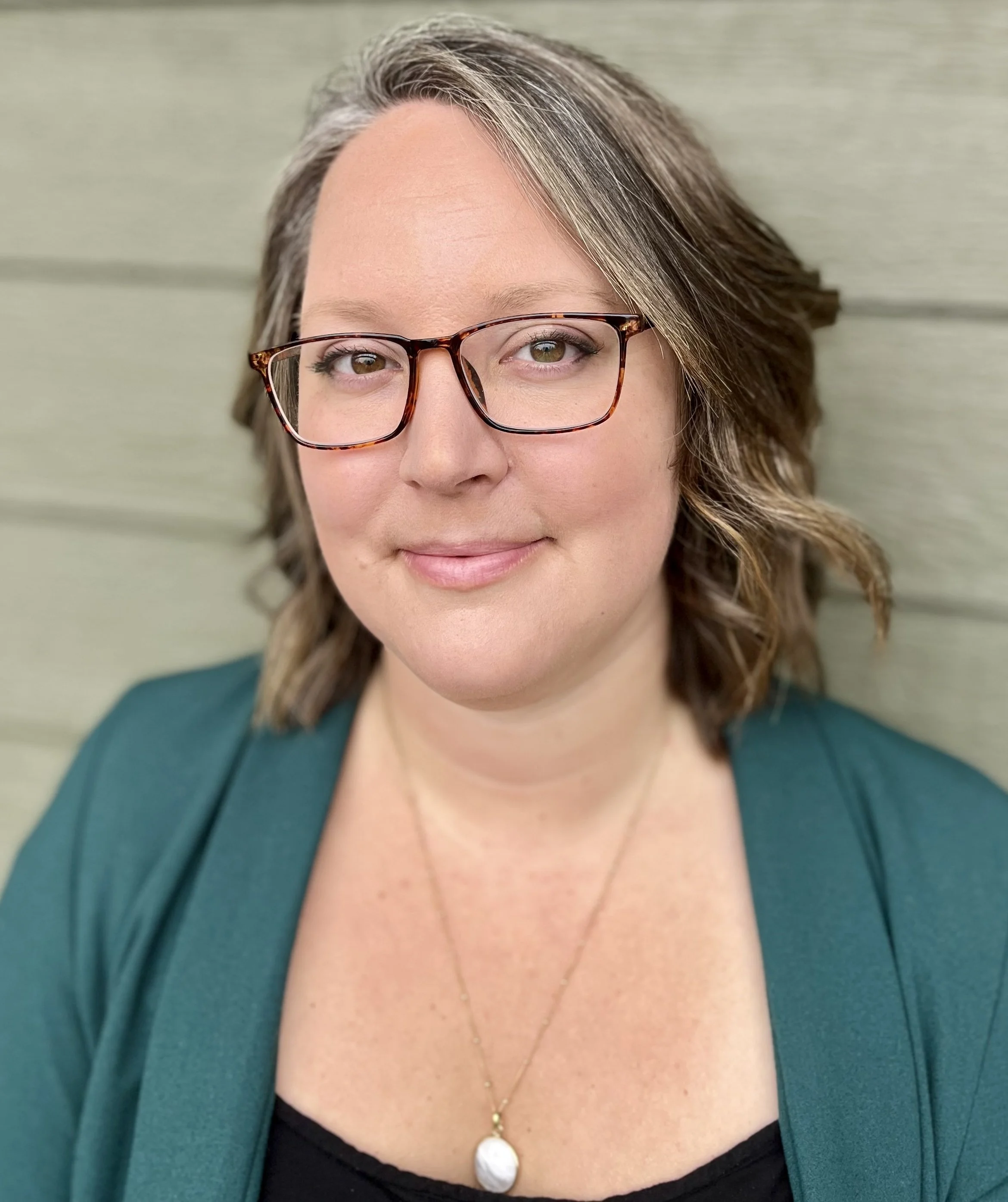

A little more about me
When I'm not working, you'll usually find me outside tending to my garden, checking on my honeybees, working on a puzzle, or curled up with a good book or podcast — usually learning something new simply because I can't help myself.
I'm completely obsessed with my two dogs, have a soft spot for farm animals, and recently picked up embroidery as a way to slow down and practice mindfulness. I'm still very much a beginner, but I don't think that's the point.
I'm also rarely without a cup of tea and genuinely love trying new things, whether that's a new hobby, a new recipe, or a new way of thinking about the world.
My family has always joked that I talk too much because I never meet a stranger. My dad used to say,
"No one's a stranger once they meet Rebecca."
I still think that's one of the nicest things anyone has ever said about me.
I've also been described as eternally curious, and honestly, I think that's one of the greatest compliments I've ever received.

-
Rebecca Kammes, PhD, LMFT
Founder, Honeycomb Therapy Center
Licensed Marriage and Family Therapist (Illinois, California, and Michigan)
AAMFT Approved Supervisor
13+ years of clinical and research experience
Research Associate, Michigan State University
Published author with 30+ peer-reviewed publications
Think we might be a good fit?
Finding the right therapist matters. If something about my approach resonated with you, I'd love to connect. Whether we end up working together or I help point you toward another resource, I'm glad you found your way here.
Because sometimes the hardest part isn't knowing what to do next. It's simply finding someone who helps life make a little more sense.